Tree Uplighting Cost Guide: How Much Does Outdoor Tree Lighting Cost?
The cost of tree uplighting depends on several factors, including:
- Number of trees
- Fixture quality
- Lighting technology
- Installation complexity
- Wiring requirements
- Landscape design goals
A simple DIY project may cost much less than a professionally designed landscape lighting system.
Tree uplighting typically costs between $50 and $300 per fixture for basic residential systems, while professional landscape lighting installations may range from several hundred to several thousand dollars depending on the number of trees, fixture quality, wiring, and design complexity.
1. DIY Tree Uplighting Cost
DIY tree lighting is popular because modern LED fixtures are easier to install.
Typical costs:
Basic Solar Tree Uplights
Approximate cost:
- $20–$80 per light
Advantages:
- Easy installation
- No wiring
- Low upfront cost
Limitations:
- Lower brightness
- Less reliable in cloudy weather
Low Voltage LED Tree Lights
Approximate cost:
- $50–$200 per fixture
Advantages:
- Better brightness
- Longer lifespan
- More professional results
2. Professional Tree Lighting Installation Cost
Professional landscape lighting usually includes:
- Lighting design
- Fixture placement
- Electrical installation
- Transformer setup
- Cable installation
Typical project ranges:
Small residential project:
- $500–$1,500
Medium landscape:
- $1,500–$5,000
Large properties:
- $5,000+
3. Factors That Affect Tree Uplighting Costs
Tree Size
Large trees require:
- More powerful fixtures
- More installation work
- Additional lighting angles
Number of Fixtures
A single decorative tree may need:
- One light
A large feature tree may need:
- Three or more lights
Fixture Quality
Premium LED landscape lights cost more but provide:
- Better durability
- Better light output
- Longer lifespan
Installation Difficulty
Costs increase when installers need to:
- Dig trenches
- Hide cables
- Work around existing landscaping
Professional Tip: Invest in Quality Fixtures for Long-Term Savings
Cheap outdoor lights may seem affordable but often require:
- Frequent replacement
- More maintenance
- Lower-quality illumination
High-quality LED tree uplights usually provide better long-term value.
Tree Uplighting Maintenance Guide
Outdoor lighting systems are exposed to:
- Rain
- Dust
- Temperature changes
- Seasonal weather
Regular maintenance keeps your landscape lighting looking professional.
1. Clean Fixtures Regularly
Outdoor lights collect:
- Dirt
- Leaves
- Insects
- Mineral deposits
Cleaning schedule:
- Every 3–6 months
Benefits:
- Brighter output
- Better beam quality
2. Adjust Light Direction
Landscape changes over time.
Trees grow and branches move.
Check:
- Beam angle
- Fixture position
- Shadow patterns
Adjust when needed.
3. Inspect Cables and Connections
Look for:
- Loose connections
- Damaged wires
- Water exposure
Especially after:
- Storms
- Landscaping work
- Extreme weather
4. Trim Vegetation Around Fixtures
Plants can block light.
Maintain:
- Clear beam paths
- Proper airflow
- Visible fixtures
5. Replace Aging Components
Modern LED systems last many years, but components may eventually need replacement.
Common replacements:
- Transformers
- Connectors
- Fixtures
- Timers
Professional Tip: Schedule Seasonal Lighting Checks
The best time to inspect outdoor tree lighting is:
- Spring
- Fall
because these seasons often bring:
- Plant growth changes
- Weather transitions
Common Tree Uplighting Mistakes to Avoid
Even expensive lighting systems can look poor if installed incorrectly.
Mistake 1: Using Too Much Brightness
Overly bright lights can make trees look unnatural.
Problems:
- Excessive glare
- Washed-out appearance
- Loss of nighttime atmosphere
Solution:
Use balanced brightness.
Mistake 2: Lighting Every Tree the Same Way
Different trees require different approaches.
A palm tree and an oak tree should not receive identical lighting.
Consider:
- Tree shape
- Height
- Branch density
Mistake 3: Placing Lights Too Close to the Trunk
Lights directly against the trunk can create:
- Harsh hotspots
- Flat appearance
Move fixtures outward when needed.
Mistake 4: Ignoring Neighbor Visibility
Bright outdoor lighting can affect nearby properties.
Avoid:
- Direct glare toward windows
- Excessive brightness
Use:
- Shielded fixtures
- Proper aiming
Mistake 5: Choosing the Wrong Color Temperature
Very cool white lighting can make trees appear unnatural.
Most residential landscapes look better with:
- 2700K–3000K warm white
Mistake 6: Poor Cable Planning
Visible wiring reduces the professional appearance.
Plan:
- Hidden cable routes
- Proper spacing
- Safe connections
Mistake 7: Forgetting Tree Growth
Trees change over time.
A good lighting design considers:
- Future branch growth
- Seasonal changes
- Maintenance access
Frequently Asked Questions About Tree Uplighting
1. What is tree uplighting?
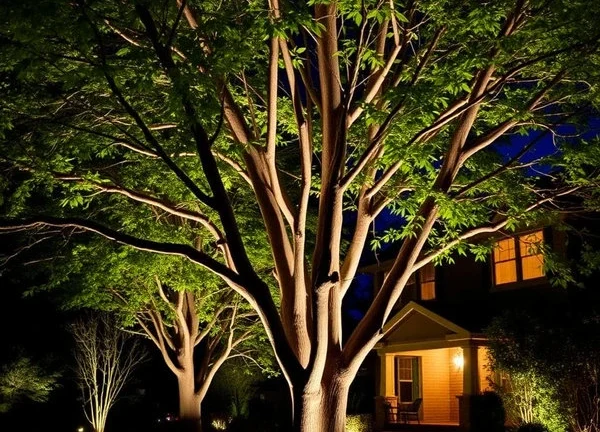
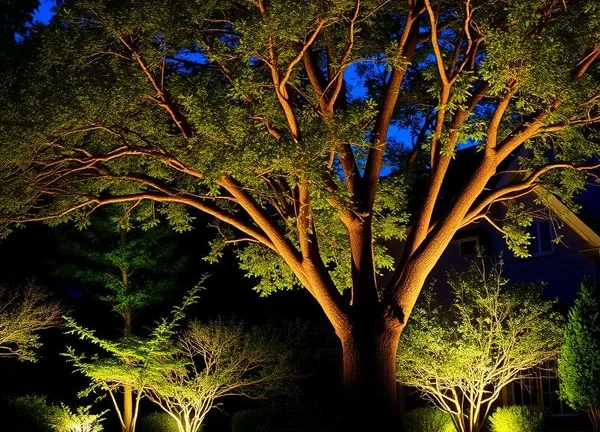
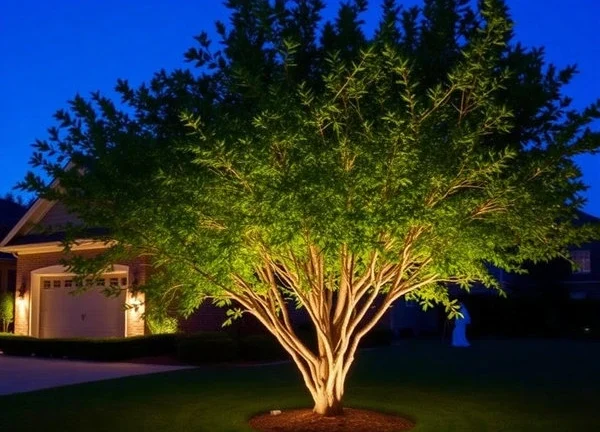
Tree uplighting is an outdoor lighting technique that places fixtures near trees and directs light upward to highlight trunks, branches, and canopies.
2. What are the best lights for uplighting trees?
The best lights are usually LED landscape spotlights because they provide:
- Energy efficiency
- Adjustable beams
- Outdoor durability
- Strong illumination
3. How do you uplight a tree?
To uplight a tree:
- Place outdoor-rated lights near the tree base.
- Aim beams upward.
- Adjust angles after dark.
- Balance brightness with surrounding landscape.
4. How many lights do I need for one tree?
It depends on size.
Small tree:
- 1 light
Medium tree:
- 2 lights
Large feature tree:
- 3 or more lights
5. What color light is best for tree uplighting?
Warm white between 2700K and 3000K is usually the most natural choice for residential tree lighting.
6. Are LED tree uplights worth it?
Yes.
LED tree uplights offer:
- Lower energy use
- Longer lifespan
- Less maintenance
- Better performance
7. Can solar lights be used for tree uplighting?
Yes, but they are usually better for small decorative trees because they may provide less brightness than wired LED systems.
8. How far should a spotlight be from a tree?
Many fixtures work well when placed:
- 2–8 feet away
The ideal distance depends on beam angle and tree size.
9. What is the best beam angle for tree lighting?
It depends on the tree.
- Narrow beam: Tall trees
- Medium beam: Average trees
- Wide beam: Large canopies
10. Does tree uplighting increase home value?
Professional landscape lighting can improve curb appeal, which may positively influence how a property is perceived.
11. Can tree uplighting be used year-round?
Yes.
A well-designed system works through:
- Summer foliage
- Fall colors
- Winter branches
12. Is low voltage tree lighting safe?
Yes.
Low voltage landscape lighting is commonly used because it is:
- Energy efficient
- Safer for residential applications
- Easier to expand
13. How much electricity do LED tree lights use?
LED landscape lights typically use significantly less electricity than traditional outdoor lighting systems.
14. Can I install tree uplights myself?
Yes, especially with:
- Solar fixtures
- Low voltage kits
Professional installation may be better for large properties.
15. Should tree uplighting point directly at branches?
Not always.
The best angle depends on:
- Tree structure
- Desired effect
- Light intensity
16. How do I prevent tree lights from creating glare?
Use:
- Shielded fixtures
- Proper positioning
- Correct beam angles
17. Are outdoor tree lights waterproof?
Quality outdoor fixtures should have appropriate weather protection ratings, such as IP65 or higher.