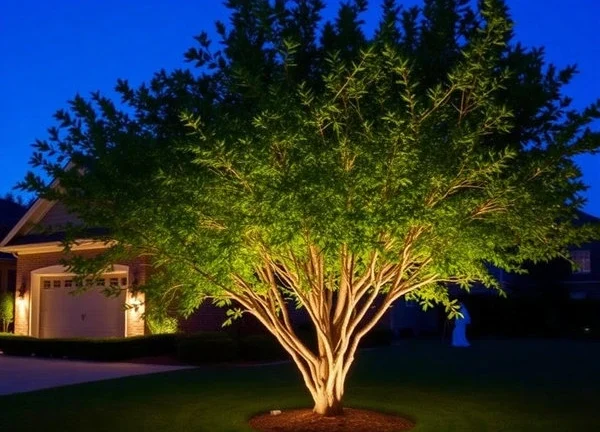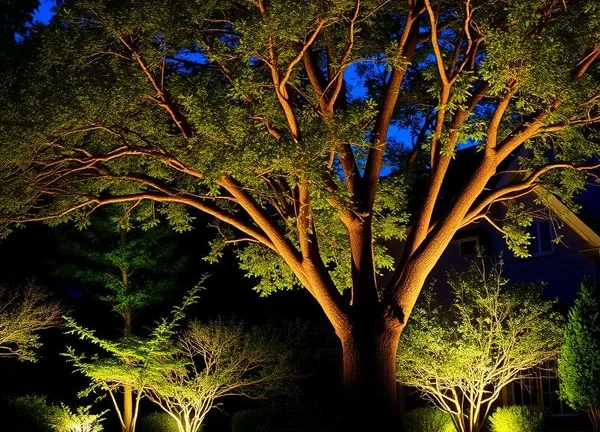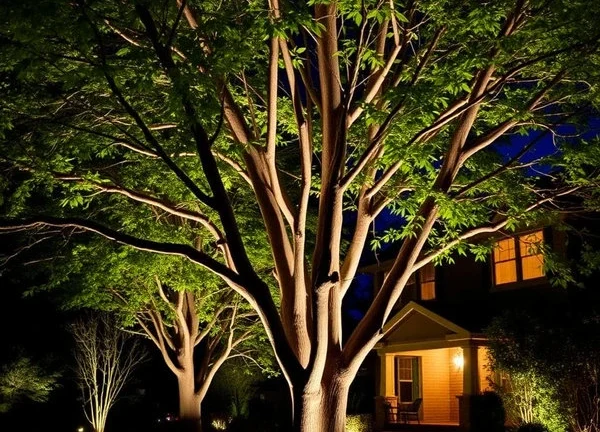
How to Install Tree Uplighting for a Professional Outdoor Lighting Effect
Installing tree uplighting may seem simple, but achieving a professional appearance requires careful planning. The position, angle, brightness, and spacing of each fixture directly affect the final result.
A poorly placed light can create:
- Harsh glare
- Flat lighting
- Overexposed areas
- Unnatural shadows
A properly installed tree uplight creates:
- Depth
- Texture
- Natural contrast
- Architectural beauty
To install tree uplighting, place outdoor-rated LED fixtures near the tree base, aim the light toward the trunk and canopy, adjust the beam angle based on tree height, and test different positions before permanently securing the fixtures.
Step 1: Evaluate the Tree Before Installing Lights
Every tree has unique characteristics.
Before installation, examine:
- Tree height
- Trunk width
- Branch structure
- Leaf density
- Surrounding landscape
Important questions:
- Is the tree tall or short?
- Does it have an open canopy?
- Does it have interesting bark?
- Is it visible from the street or patio?
Step 2: Choose the Correct Fixture Location
The fixture location determines the lighting effect.
Common placement options include:
Near the Tree Base
Best for:
- Strong trunk illumination
- Dramatic upward beams
Works well for:
- Oak trees
- Maple trees
- Large shade trees
Slightly Away From the Tree
Placing lights 3–8 feet away creates:
- Wider coverage
- Softer shadows
- More natural appearance
Ideal for:
- Large canopies
- Multiple branches
Multiple Light Positions
Large trees often require several fixtures.
Example:
A mature tree may use:
- Two narrow spotlights for trunk detail
- Two wider flood lights for canopy coverage
Professional Tip: Test Lighting Positions at Night
Many homeowners install lights during the day and assume the placement will work.
However, nighttime testing reveals:
- Real shadows
- Brightness levels
- Beam coverage
- Glare issues
Always adjust after sunset.
Step 3: Select the Correct Beam Angle
Beam angle determines how light spreads.
Narrow Beam (10°–25°)
Best for:
- Tall trees
- Specific branches
- Vertical accents
Creates:
- Dramatic spotlight effect
Medium Beam (30°–45°)
Best for:
- Average residential trees
- Balanced coverage
Most common choice.
Wide Beam (50°+)
Best for:
- Large canopy trees
- Group lighting
Creates:
- Soft overall illumination
The best beam angle for tree uplighting depends on tree size. Narrow beams work best for tall trees, medium beams are ideal for average landscape trees, and wide beams are better for large canopies or multiple branches.
Step 4: Choose the Right Brightness Level
Brightness should match tree size.
Small Trees
Recommended:
- 100–300 lumens
Examples:
- Decorative trees
- Small garden plants
Medium Trees
Recommended:
- 300–700 lumens
Examples:
- Backyard trees
- Ornamental trees
Large Trees
Recommended:
- 700–1500+ lumens
Examples:
- Mature oak trees
- Large landscape features
Professional Tip: Avoid Over-Lighting Trees
More brightness does not always create better results.
Too much light can:
- Make trees look artificial
- Create excessive glare
- Reduce nighttime atmosphere
Professional landscape lighting focuses on balance.
How to Space Multiple Tree Uplights
Spacing depends on:
- Tree size
- Fixture brightness
- Desired effect
Single Light Technique
Best for:
- Small ornamental trees
- Decorative accents
Effect:
Simple and elegant.
Two-Light Technique
Best for:
- Medium trees
Benefits:
- More depth
- Better branch visibility
Three-Light Technique
Best for:
- Large feature trees
Creates:
- Balanced illumination
- Professional appearance
Cross Lighting Technique
Place lights from different angles.
Benefits:
- Reduces shadows
- Creates natural appearance
Commonly used for:
- Large oak trees
- Commercial landscapes
Tree Uplighting Applications for Different Outdoor Areas
Tree lighting can transform many outdoor environments.
Below are common residential and commercial applications.
1. Front Yard Tree Uplighting
Front yard lighting improves:
- Curb appeal
- Entry appearance
- Property visibility
Popular trees:
- Maple
- Oak
- Birch
- Palm trees
Lighting effect:
Elegant and welcoming.
2. Backyard Tree Lighting
Backyard uplighting creates a relaxing outdoor environment.
Perfect for:
- Evening gatherings
- Outdoor dining
- Family activities
Combine with:
- Patio lighting
- String lights
- Path lights
3. Garden Tree Uplighting
Gardens benefit from layered lighting.
Use uplights to highlight:
- Flowering trees
- Decorative plants
- Landscape structures
4. Patio and Outdoor Living Areas
Tree lighting extends usable outdoor time.
Applications:
- Outdoor kitchens
- Fire pit areas
- Seating spaces
5. Driveway Tree Lighting
Trees near driveways can improve:
- Night visibility
- Entrance appearance
- Property definition
6. Commercial Property Landscaping
Businesses use tree uplighting for:
- Hotels
- Restaurants
- Office buildings
- Retail spaces
Benefits:
- Professional appearance
- Improved nighttime branding
7. Wedding and Event Spaces
Tree uplighting creates:
- Romantic atmosphere
- Elegant backgrounds
- Photo opportunities
Popular colors:
- Warm white
- Soft amber
8. Poolside Tree Lighting
Outdoor lighting around pools adds:
- Safety
- Style
- Relaxing ambiance
Important:
Use outdoor-rated waterproof fixtures.
9. Resort and Hospitality Landscapes
Hotels use tree uplighting to create:
- Luxury environments
- Memorable guest experiences
10. Public Parks and Community Areas
Landscape lighting can improve:
- Safety
- Nighttime beauty
- Visitor experience
Professional Tip: Combine Tree Lighting With Other Landscape Lighting
The best outdoor designs use multiple lighting layers:
- Tree uplighting
- Path lighting
- Wall washing
- Step lighting
- Accent lighting
This creates a complete nighttime landscape.
Tree Uplighting Ideas for Different Tree Types
Different trees require different approaches.
Oak Tree Uplighting
Oak trees have:
- Large trunks
- Wide branches
- Dense canopies
Recommended:
- Multiple LED spotlights
- Cross lighting
- Warm white color
Palm Tree Uplighting
Palm trees benefit from:
- Narrow beams
- Strong vertical lighting
Highlight:
- Tall trunks
- Leaf structures
Maple Tree Uplighting
Maples have attractive seasonal colors.
Use:
- Medium beam lights
- Warm tones
Birch Tree Uplighting
Birch bark is naturally decorative.
Use:
- Grazing technique
This emphasizes:
- White bark
- Texture
Flowering Tree Lighting
Examples:
- Cherry trees
- Magnolia trees
Use:
- Softer lighting
- Wider beams
to highlight flowers.
Professional Tip: Consider Seasonal Changes
Trees change throughout the year.
Plan lighting for:
- Summer leaves
- Fall colors
- Winter branches
A good lighting design works year-round.
Smart LED Tree Uplighting Options
Modern landscape lighting includes smart technology.
Features may include:
Remote Control
Allows:
- Brightness adjustment
- Scheduling
- Easy operation
Color Changing LEDs
Useful for:
- Holidays
- Events
- Special occasions
Automated Timers
Benefits:
- Saves energy
- Reduces maintenance
Low Voltage Landscape Lighting Systems
Many residential tree uplighting systems use:
- 12V low voltage lighting
Advantages:
- Safer installation
- Lower energy use
- Easier expansion
Low voltage LED tree uplighting systems are popular for residential landscapes because they are energy efficient, safer than traditional high-voltage systems, easier to install, and flexible for future landscape lighting upgrades.
Professional Tip #8: Use Timers or Smart Controls
Automatic controls help:
- Reduce electricity costs
- Maintain consistent lighting schedules
- Extend fixture lifespan